
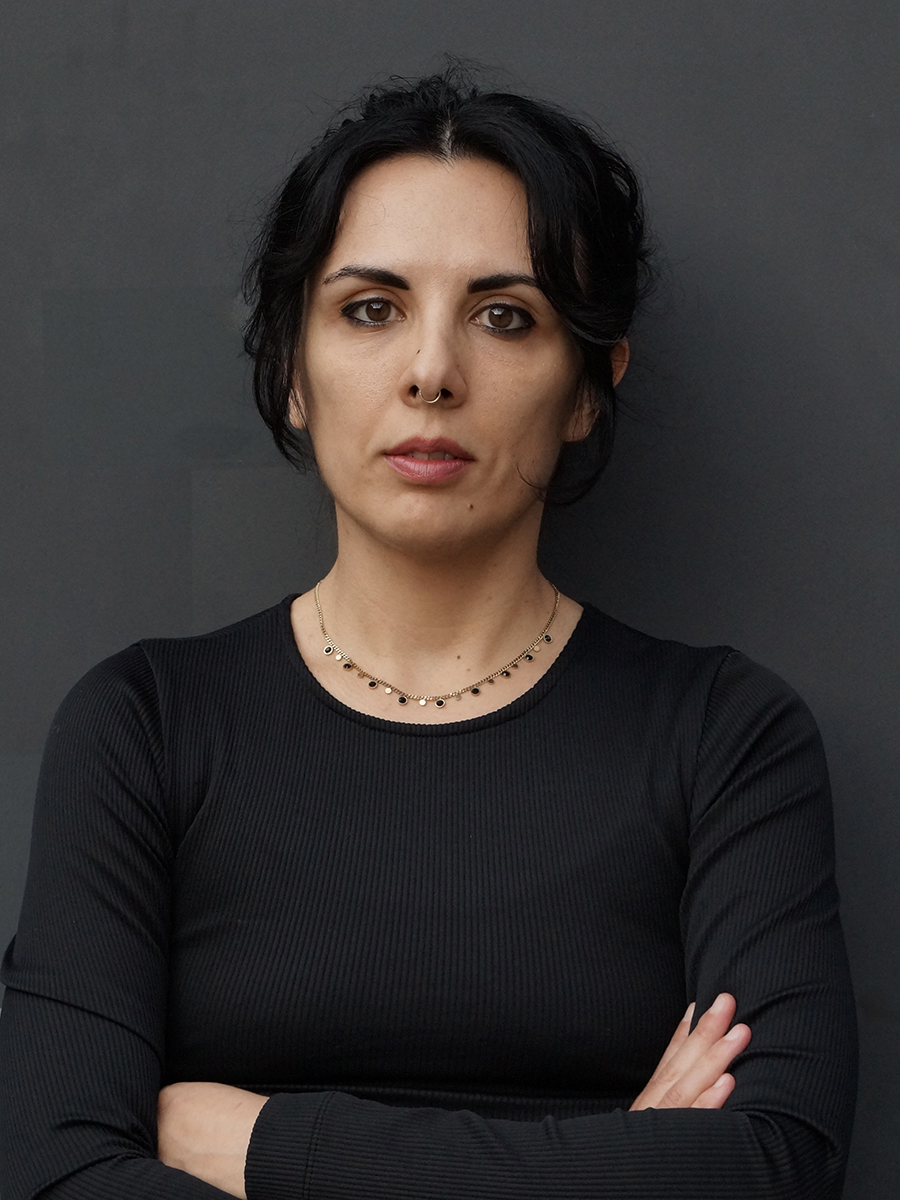
Vita
Laura Banella is Assistant Professor of Italian at the University of Notre Dame, US. She is currently Humboldt Research Fellow at the Italienzentrum of the Freie Universität Berlin. She studied at the University of Pisa and at the Scuola Normale Superiore. She earned a PhD in Romance Studies from Duke University (2018) and a Doctorate in Italian Literature from the University of Padova (2014). She pursued her postdoctoral research and taught in Italy (University of Padova, University of Milan) and the UK (University of Oxford).
Her research interests lie in medieval Italian literature, the lyric tradition, and the history of literary criticism. Her most recent research monograph, Rewriting Dante. Lyric Books and Cultural Authority in Medieval and Renaissance Italy (ca. 1290–1550) (2026), explores how Dante Alighieri’s lyric poetry was copied, edited, and printed, revealing the ways which these processes produced a distinct cultural figure: ‘Dante the lyric poet’. By tracing the material and textual ‘rewriting’ of his lyrics, it reconstructs the formation of Dante’s authoriality and the evolving perception of lyric authority in medieval and Renaissance Italy.
Visiting Project 2026-27
The project offers an interdisciplinary study of Italian medieval lyric poetry in order to establish its function as a public medium and cultural practice: a form of public discourse for philosophical and political elaboration, exploring the meaning of human intentions, beliefs, and actions. It demonstrates the political function of the lyric, showing why it was chosen as preferred medium of critical inquiry and speculation, of identity construction, or of factional debate. It focuses on noblemen and notaries in early 14th-century Perugia, whose eclectic lyrics extended beyond elevated love poetry to encompass political commentary on ‘global’ issues, municipal affairs ranging from the economy to a gruesome unpunished femicide, and themes of carnal desire, including love poems addressed to both women and men – something exceptional in the Italian lyric tradition. The project thus frames the Perugian circle’s lyric self-fashioning as a form of autoreduction, asking how the involuntary contraction of its members’ political power intersected with a collective poetic reworking of elite, masculine, and heteronormative identities from within the social and literary structures that sustained them.
It focuses on noblemen and notaries in early 14th-century Perugia, whose eclectic lyrics extended beyond elevated love poetry to encompass political commentary on ‘global’ issues, municipal affairs ranging from the economy to a gruesome unpunished femicide, and themes of carnal desire, including love poems addressed to both women and men – something exceptional in the Italian lyric tradition. The project thus frames the Perugian circle’s lyric self-fashioning as a form of autoreduction, asking how the involuntary contraction of its members’ political power intersected with a collective poetic reworking of elite, masculine, and heteronormative identities from within the social and literary structures that sustained them.